The Longest Night Reset: A Three-Card Solstice Spread to Close 2026 and Seed 2027
New Year's Eve gets all the credit, but the winter solstice does the actual work. On December 21, 2026, the Northern Hemisphere hits its shortest day and longest night, and then the light starts coming back. Slowly. Barely. But measurably.
That is a better metaphor for a year-end ritual than a ball dropping, mostly because it is honest. Nobody's year ends on a clean edge. It ends in half-finished projects, awkward group chats, a gym membership you are still paying for, and a genuine, quiet hope you are slightly embarrassed to name.
The solstice spread is three cards. Release, keep, plant. You can do it on the 21st, or on the night closest to it when you actually have twenty minutes alone.
Why the Solstice Beats January 1
The astrological calendar has been arguing this for a long time. The solstice is a fixed, physical event — it happens whether or not you feel motivated. January 1 is a social agreement, which means it comes with a lot of noise attached: resolutions, comparison, someone else's before-photo.
Capricorn season begins right around this point, which is appropriate. Capricorn is the sign that builds things in the dark and expects results later. That is exactly what a solstice ritual asks of you. No celebration required. Just a decision, made quietly, that you will act on when the light returns.
Setting the Space (Minimal Version)
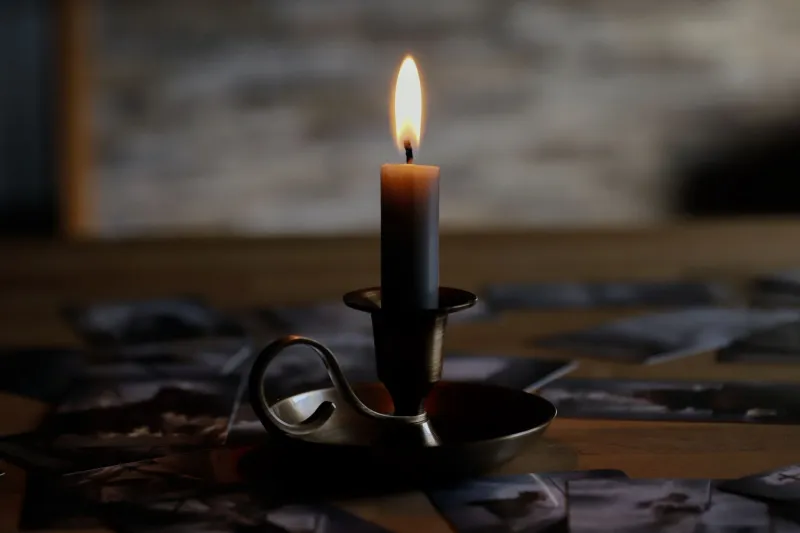
You do not need much. A candle — one is fine, and a battery one is also fine, no gatekeeping here. Your deck. Something to write on. Kick the shoes off, lower the lights, and put the phone in another room, because the entire value of this exercise is attention.
Shuffle until your hands feel less restless. That is the actual signal. Then split the deck into three piles and draw one card from each pile, face up, left to right.
Card One: Release
Ask out loud: what am I putting down before the year ends?
This is not the same as what went wrong. The release card is the thing you are still carrying that no longer earns its weight — a grudge, a self-concept, a project that died in March and is still taking up space in your head.
Read it pragmatically. The Hanged Man rarely means surrender in a sad sense; in this position it usually means you are done waiting for a situation to resolve itself and are ready to stop checking. The Eight of Cups is the most literal release card in the deck: you are leaving. The Tower looks scary and is mostly a relief in this spot — something fell over, and you have been trying to prop it back up with your shoulder. Stop. Let it be down.
Reversals in this position sometimes mean you are releasing something you did not choose to lose, which is a different ritual. Grieve it properly, then let the card stand as evidence that you did.
Card Two: Keep
The question here is: what do I want to bring forward on purpose?
This is the most underrated card of the three, because most people skip straight from releasing to planning. But you are not starting from zero, and pretending you are is how people burn out by February.
The Nine of Pentacles is the classic keep card — you built something real, keep it. The Two of Cups means a relationship is worth protecting, and it usually needs a specific, unglamorous effort to protect it. The Star in the keep position says keep the hope, even the part that feels naive. The Chariot can mean keep the momentum and skip the reset entirely, which is a valid outcome.
If you draw a court card here, it is often a person. Keep them close. Say so to their face before December gets away from you.
Card Three: Plant
Ask: what am I starting that will not show up for months?
This is the card people misread as a wish. It is not a wish. It is a seed — which means it is small, it is underground, and it requires a certain amount of tedious, invisible maintenance.
The Ace cards are the purest plant cards. A single new beginning, undramatically stated. The Fool means the seed is a step you have not committed to yet, and the planting is the commitment. The Page of Pentacles is a study card, which is the least sexy and most reliable kind of new beginning. The Empress means the seed needs tending more than it needs force — plant it, then leave it mostly alone.
Write this card down. You will want to look at it again in March, when the ground is still hard and the whole idea feels silly.
Turning Three Cards Into Two Commitments
Three cards is a nice ritual. Two commitments is what makes it a practice. Here is the translation step.
One concrete action for December. Not a lifestyle change. An action, dated, small enough that you cannot reasonably fail. If your release card is the Eight of Cups, the action might be one hard conversation or one email you send before the 31st. If your keep card is the Two of Cups, it might be a lunch you actually put on the calendar. If your plant card is the Ace of Pentacles, it might be opening the savings account — the actual opening, not the researching of the opening.
One intention for 2027. A single sentence, present tense, no numbers. Not five pounds, not ten thousand dollars. Something you would still be willing to want if nobody ever found out. Write it in the same place you wrote the cards, and put it somewhere you will trip over it: inside a book you are reading, taped to a mirror, at the bottom of the email drafts folder.
A Realistic Note About the Dark
The long night does not require pretending to be cheerful. If the cards come out heavy — if you pull the Five of Cups and the Ten of Swords and the Four of Wands in that order — that is not a curse on your 2027. It is a picture of a year that took something and left something. Read it plainly, do the one action, and let the season turn.
The light comes back on a schedule, roughly a minute a day at first. Your intentions work the same way. Start on December 21, keep the plan embarrassingly small, and let the dark do part of the job.