Flip the Script: What Reversed Tarot Cards Are Really Trying to Tell You
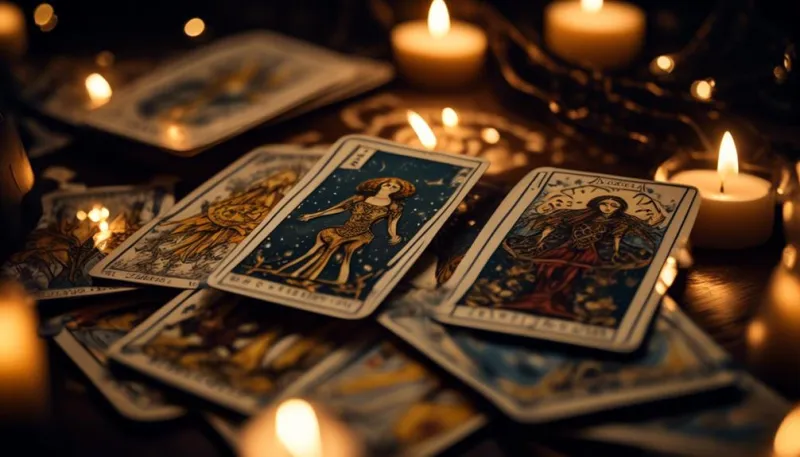
Photo: reversed tarot cards spread upside down mystical reading candlelight, via sarahscoop.com
There's a moment every new tarot reader dreads: you pull a card, and it lands upside down. Maybe it's the Tower. Maybe it's the Ten of Swords. Your stomach does a little flip, and suddenly you're spiraling — Is this bad? Is everything bad? Am I doomed?
Take a breath. Because here's the truth that experienced readers wish someone had told them from day one: reversed cards aren't the tarot's way of punishing you. They're not a cosmic red flag or a sign that your reading has gone sideways. They're actually some of the most interesting cards you can pull — if you know how to listen to them.
Let's change the way you see the upside-down.
Why Reversals Get Such a Bad Reputation
The fear around reversed cards is totally understandable. A lot of beginners learn tarot from quick-reference guides that list reversed meanings as the "negative" version of the upright card. The upright Empress means abundance and creativity? Reversed, it must mean scarcity and creative blocks. Simple enough, right?
But that approach flattens the whole system. Tarot isn't a binary of good and bad — it's a mirror. Every card, upright or reversed, is reflecting something back at you. And reversals, specifically, are often pointing inward rather than outward. They're saying: look here, something's happening beneath the surface.
The other reason reversals get a bad rap is pure intimidation. Learning 78 cards is already a lot. Learning 78 plus their reversed counterparts feels overwhelming, so many beginners just skip reversals entirely and read everything upright. That's a valid choice — but it also means leaving a whole layer of meaning on the table.
What Reversals Actually Mean (It's More Than One Thing)
Here's the liberating part: there's no single "correct" way to interpret a reversal. Seasoned readers use different frameworks depending on their style, their deck, and the specific question at hand. Here are the most common approaches:
1. Blocked or Delayed Energy
This is the most widely used interpretation. A reversed card suggests that the upright energy is present, but something is obstructing it. The Ace of Pentacles reversed, for example, might not mean "no new opportunity" — it might mean the opportunity is there, but you're not in a position to receive it yet. Timing, mindset, or external circumstances could be the blocker.
2. Internalized Energy
Instead of projecting outward, the card's energy is turned inward. The reversed Strength card might not mean you lack courage — it might mean your courage is quietly building inside you, not yet visible to others. This interpretation is especially powerful for self-reflection spreads.
3. Resistance or Avoidance
Sometimes a reversal is the deck gently (or not so gently) pointing out that you're resisting something. The reversed Four of Cups, for instance, could mean you're so checked out or withdrawn that you're missing what's right in front of you. Not a punishment — a nudge.
4. Shadow Work and Hidden Truths
Reversals can illuminate what's operating in your blind spots — patterns, fears, or emotions you haven't fully acknowledged. Think of them as the tarot inviting you to go deeper. This is where reversals become incredibly valuable for personal growth readings.
5. Releasing or Completion
In some traditions, a reversed card signals that the upright energy is fading or wrapping up. A reversed Three of Swords might mean you're finally moving through grief rather than sitting in it. The pain isn't gone, but it's starting to lift.
You don't have to commit to just one of these frameworks. Many readers intuitively choose which lens fits best based on the card's position, the surrounding cards, and the question being asked. That's not inconsistency — that's fluency.
Practical Techniques for Reading Reversals With Confidence
Okay, theory is great. But how do you actually do this in a reading without freezing up? Here are some techniques that work:
Start With the Upright Meaning First
Before you try to interpret the reversal, ground yourself in the card's core upright energy. What does this card represent when it's right-side up? Once that's solid in your mind, ask: what happens when that energy gets turned around, blocked, or directed inward?
Pay Attention to the Card's Image
Many readers find it helpful to literally look at what's happening visually when the card is flipped. In the Ten of Pentacles reversed, the family scene appears to be falling apart or upside down — that visual cue can spark intuitive insight that a keyword list never could.
Use the Surrounding Cards as Context
A reversal rarely exists in isolation. If a reversed card is flanked by upright, positive cards, the blockage might be minor or temporary. If it's surrounded by other challenging cards, the reversal's energy might be more significant. Let the spread tell a story.
Journal Your Reversals
Keep a simple tarot journal and note every time you pull a reversed card, what you interpreted it as, and whether that resonated over time. Patterns will emerge. You'll start to notice which reversal framework naturally clicks for you with which cards.
A Simple Spread Designed for Reversed Cards
Want to practice? Try this three-card spread specifically built to work with reversals:
The Shadow Spotlight Spread
- Card 1 (What's Hidden): Shuffle your deck and intentionally pull for a reversed card — keep flipping until you get one. This card reveals something operating beneath your awareness.
- Card 2 (The Block): Pull a second card (upright or reversed) to clarify what's creating the obstacle or resistance.
- Card 3 (The Path Through): Pull a final card as guidance on how to work with, rather than against, the energy revealed.
This spread works beautifully for moments when you feel stuck, confused, or like something's off but you can't quite name it.
Common Myths Worth Busting
"Reversed cards mean the opposite of upright." Nope. Opposites are too simplistic. Reversed cards are nuanced, not negated.
"You have to read reversals to be a real reader." Also nope. Plenty of skilled, experienced readers choose to read all cards upright and use position in the spread to convey energy. There's no tarot police.
"Reversed Major Arcana are especially bad." The Major Arcana reversed are actually some of the most powerful cards for deep inner work. The reversed High Priestess? She's inviting you to trust your intuition more, not warning you of disaster.
"If I get lots of reversals, my deck is broken." Your deck is fine. A reading heavy with reversals might just mean there's a lot of internal processing happening right now — which is actually really valuable information.
Embracing the Upside-Down
Here's the bigger picture: tarot is a tool for self-understanding, not a crystal ball of doom. And reversed cards, far from being the reading's "bad news," are often its most honest moments. They're the cards that say hey, let's go a little deeper — and that's an invitation worth accepting.
The next time a card lands upside down in your spread, don't flinch. Get curious. Ask what it's reflecting back at you. Because the universe doesn't speak in simple yes-or-no answers, and neither does your deck.
Some of the best insights live in the flip.